

As the first state established in the US, Delaware has long been recognized for its role in shaping the nation’s history. It has since emerged as a major hub for the financial services industry – becoming home to one of the nation’s largest concentrations of financial institutions. In fact, two-thirds of America’s Fortune 500 companies are incorporated in Delaware, and the financial sector accounts for nine percent of jobs in Delaware – the highest of any state.
Yet, despite its prominence in the financial industry, many Delaware residents face barriers to building wealth, accessing affordable housing and achieving long-term financial security. In Wilmington – Delaware’s largest city – these struggles include economic instability, an aging housing stock, persistent food insecurity, workforce development needs and decades of disinvestment.
Meeting these challenges requires more than any one organization can accomplish alone, which is why the National Community Reinvestment Coalition’s (NCRC) members rely on collaboration for meaningful impact and long-term progress. By partnering with nonprofits, financial institutions, community leaders and national organizations, the following organizations are increasing affordable housing, expanding access to food, developing a skilled workforce and building thriving, equitable communities. While their strategies differ, they share a belief that collective action drives change and opens new doors for individuals, families, businesses and communities in Delaware.
Central Baptist Community Development Corporation
For nearly 75 years, Central Baptist Church has been a cornerstone of Wilmington’s East Side, serving generations of Delawareans through faith, fellowship and community engagement.
In 2010, as the city faced fallouts from the housing crisis, Central Baptist Community Development Corporation (CBCDC) was created as a long-term, holistic commitment to transforming lives and strengthening the community.
“For us, transformation is not only personal – it is communal,” says Reverend Dr. Terrance Keeling, pastor of Central Baptist Church and president and CEO of CBCDC. “When we looked at the East Side and saw disinvestment, vacant housing, limited employment and families struggling to hold on, we understood those conditions as part of our call.”
One way CBCDC addresses these issues is through its Eastside Career Development Center, which provides hands-on instruction, professional skills development and job placement support to help participants build the foundation for lasting career success.
Inter-Neighborhood Community Builders, the housing and community development arm of CBCDC, works to increase affordable housing, strengthen neighborhoods and promote long-term community investment. It also provides valuable property preservation services, such as property inspection, mold remediation and winterization.
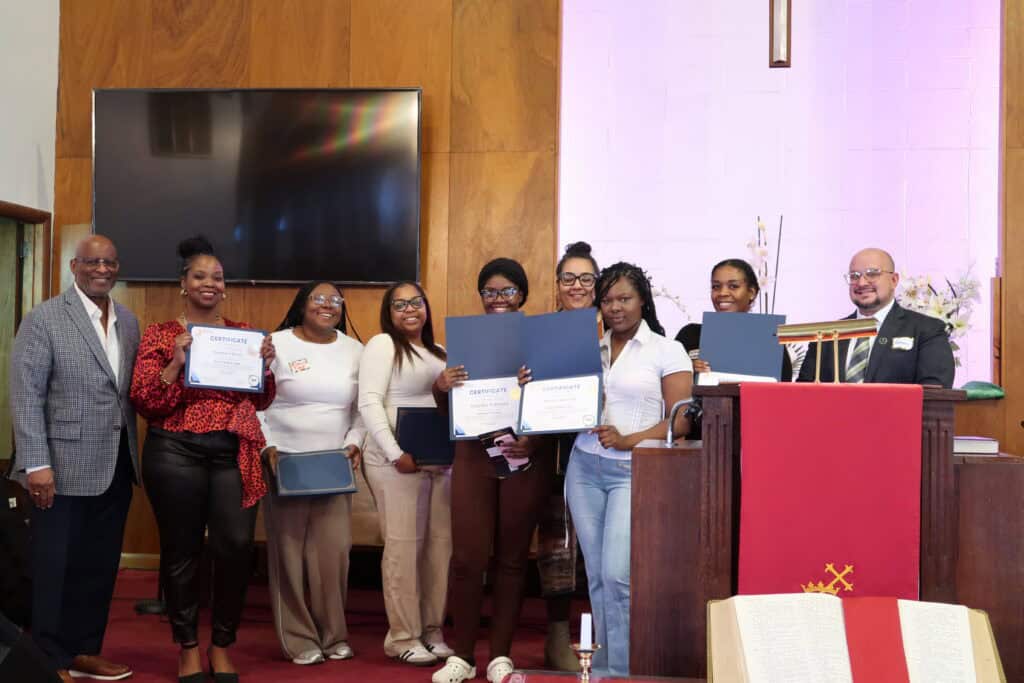
In addition to workforce and housing development, CBCDC’s holistic approach encompasses food access initiatives and community wellness programs with the understanding that people thrive when their essential needs are met together.
“We believe in whole not just soul salvation,” says Keeling. “It’s the difference between treating symptoms and building a foundation for generational transformation – the kind of transformation the gospel calls us to pursue.”
By partnering with organizations across sectors, CBCDC expands its capacity to support East Side residents and advance lasting community change.
NCRC was an early supporter of the CBCDC’s work by providing access to technical assistance and helping establish partnerships with financial institutions.
“NCRC’s collaboration has helped us move from vision to implementation, especially in areas like workforce development and housing,” says Keeling. “They have been a bridge between our calling and our capacity, helping us bring the resurrection power of the gospel into practical, sustainable community transformation.”
West Side Grows Together
Collaboration is not only part of West Side Grows Together’s work – it’s a foundational pillar of the organization itself. As a coalition of residents, businesses, churches and local leadership, West Side Grows Together and its operating organization, Cornerstone West Community Development Corporation, have been bringing diverse voices and resources together since 2011.
In response to the longstanding challenges of Wilmington’s West Side, West Side Grows Together works to create a more vibrant, equitable and resilient community. It pursues this mission by implementing the West Side Revitalization Plan. Its key pillars include increasing affordable housing, developing businesses, improving green spaces, promoting public safety, encouraging resident leadership and providing arts and culture opportunities.
“Our efforts have helped improve accountability, increase transparency and ensure that residents have a meaningful voice in shaping the future of their neighborhoods,” says Sarah Lester, president and CEO of West Side Grows Together and Cornerstone West CDC.
Members of the West Side Grows Together Steering Committee create and preserve affordable housing, revitalizing existing homes to serve special needs populations, youth aging out of foster care and individuals with disabilities. The initiative is also proud to support the artistic community through new murals and other creative initiatives.
West Side Grows Together believes in an approach called Crime Prevention Through Environmental Design, which leverages urban, architectural and natural design to deter crime. With significant community input, West Side Grows Together partnered with the City of Wilmington to restore six community playgrounds, with plans for more.
“We have seen the pride neighborhoods put into these designs and the pride with which they take care of these spaces once they’re renovated,” says Lester. “It’s resulted in increased eyes on the parks in terms of community safety and has driven away some of the activity folks were concerned about.”

Another measure of success for the coalition is its strong partnerships that bring additional resources to Wilmington’s West Side.
“Partnerships are everything [as] it’s the only way we can get things done with limited resources,” says Lester. “More people advocating for change are stronger than one voice.”
A key partner in the organization’s success, NCRC helps West Side Grows Together broaden its network via its convenings and annual conferences and strengthens advocacy efforts for investments that benefit West Side residents.
As West Side Grows Together continues to gain momentum, Lester is excited about the organization’s future and the opportunity to widen its reach.
“Whenever something works locally – like creating a mural or starting a micro grant fund – it’s not about ‘Let’s keep it to the West Side,’” Lester explains. “Instead, it’s about figuring out how we can partner with our peers and investors to bring this to a broader audience.”
For West Side Grows Together, collaboration has been central from the start, with the understanding that significant change happens when community partners work together.
Wilmington Neighborhood Conservancy Land Bank
Lasting neighborhood revitalization doesn’t happen all at once. It happens one house, one block and one neighborhood at a time. That’s the philosophy behind the Wilmington Neighborhood Conservancy Land Bank (WNCLB), the first land bank in the state. Since 2016, WNCLB has transformed vacant and neglected properties into assets that support neighborhoods and create new pathways for residents.
Over the past decade, that steady, block-by-block approach has produced measurable results. Since its founding, WNCLB has sold and repurposed 420 blighted properties, leading the city’s efforts to make Wilmington a more attractive place to live and raise a family.
The majority of these vacant properties have been sold for affordable homeownership, with 55% of buyers being Wilmington residents – a testament to WNCLB’s commitment to the communities it serves. Other properties have been redeveloped into nonprofit affordable housing projects, urban gardens and side yards for local homeowners.
WNCLB distinguishes itself by developing new channels for advancement for minority homebuyers and contractors.
“One thing I’m very proud of is that 92% of our buyers have been minority buyers,” says Richard Gessner, a longtime WNCLB board member. “That opportunity is something that didn’t really exist before we came along.”
With about 78% of contracts going to minority contractors, WNCLB provides avenues for local entrepreneurs to build and scale their businesses.
“We help people who have the skills and are working for someone else start businesses of their own,” Gessner says. “I’m a real believer that entrepreneurship can have a real impact on a town like ours.”
WNCLB values its strategic relationships with the City of Wilmington, nonprofit organizations, for-profit companies and community members. Gessner credits WNCLB’s ongoing success to these partnerships, including their membership with NCRC, which has played an important role in connecting WNCLB with resources, peers and opportunities that have helped advance its work.
“By working with others and learning from others, you can get so much more done,” Gessner explains. “We’re small so the relationships we build become instrumental to our success.”
Delaware Community Reinvestment Action Council
When major bank mergers reshaped Delaware’s financial landscape in 1987, community leaders united to ensure low- and moderate-income communities wouldn’t be left behind. This led to the creation of the Delaware Community Reinvestment Action Council (DCRAC), an organization that spearheaded the years-long fight against subprime mortgages and payday lenders.
Today, DCRAC’s comprehensive approach includes education, banking access, tax assistance, estate planning, heirs’ property preservation and other programs that deepen economic opportunity. Its work reflects a belief that lasting financial security requires addressing both individual needs and systemic challenges.
“That philosophy has shaped every major initiative we have undertaken,” says DCRAC’s Deputy Director Jaclyn Quinn.
DCRAC progresses its mission through three core strategies: Money School, which provides free financial education, DCRAC Law, which offers free tax services, other affordable legal services and its ongoing efforts to advance community wealth-building policies.
“Knowledge alone cannot resolve legal barriers that threaten a family’s financial future,” Quinn explains. “Many families we serve know what they should do – they simply cannot afford the legal assistance needed to protect what they have worked so hard to achieve.”
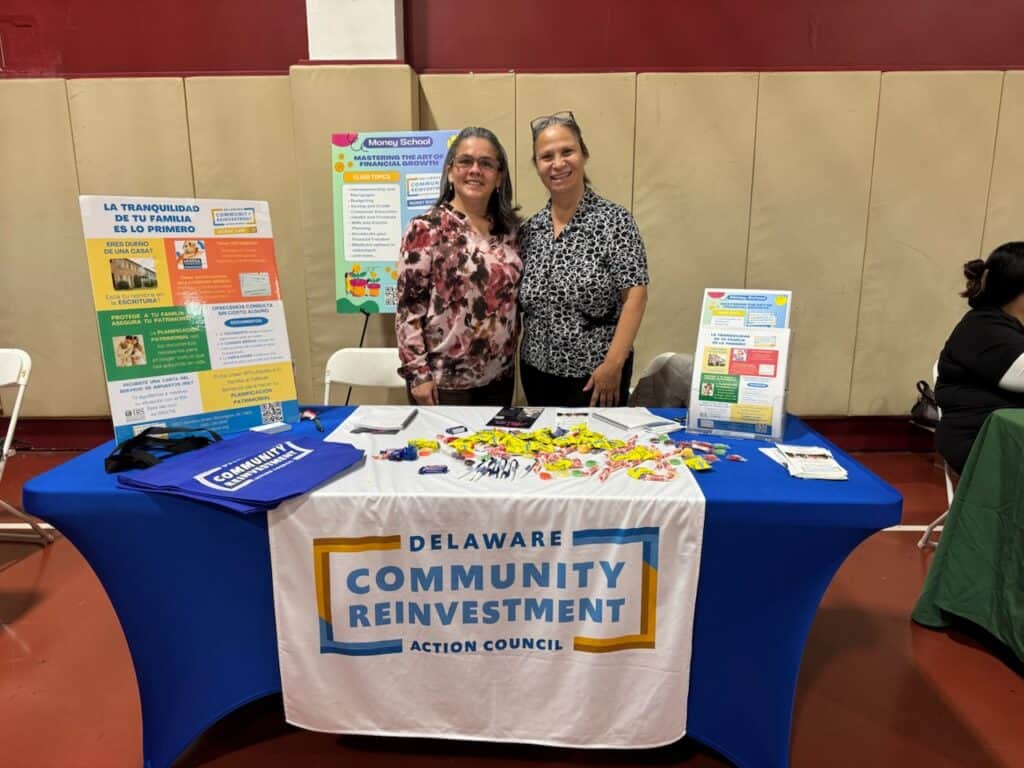
Among its many accomplishments, DCRAC established Delaware’s only Low Income Taxpayer Clinic in 2003. In 2011, the organization chartered Stepping Stones Community Federal Credit Union, which became an independent financial institution in 2025. DCRAC Law was formed in 2019 to expand legal services, such as estate planning and tangled title representation.
DCRAC has helped secure substantial Community Reinvestment Act (CRA) commitments from prominent financial institutions to enhance community well-being and extend access to financial services for low- to moderate-income residents. For example, DCRAC pushed regulators to hold Capital One accountable for Discover’s CRA commitments during their 2025 merger. The organization also ensured foreclosure settlements supported community housing needs.
“Our greatest measure of success is the thousands of families who have been able to keep their homes, resolve tax disputes, access safe financial services, protect inherited property and build brighter financial futures,” Quinn explains.
Like the other Delaware-based organizations, DCRAC believes that solving complex economic challenges requires collaboration across stakeholders and sectors. Quinn credits national organizations like NCRC for expanding DCRAC’s capacity and creating a broader network of invaluable resources.
“That collective approach is what makes economic mobility not only possible for individual families, but sustainable for entire communities,” Quinn says. “Together, we are stronger advocates than any one organization could be alone.”
Nicole Rothstein is a Contributing Writer.
